

Danel Turk, ABB Solution Portfolio Manager for Data Centres
Sustainability, giving back and the increased uptake in new technologies are among the big trends for data centres in 2023. Here, Danel Turk, ABB Solution Portfolio Manager for Data Centres, explains why this year marks a change in direction for many data centres and outlines some of the trends influencing priorities:
2023 is poised to be a year of growth and of action on sustainability and climate change and this will be reflected in the trends we expect to see influencing the data centre industry.
Here are the six key trends gathering momentum in 2023:
Modular and offsite builds – the cost effective and fast way to scale up capacity
Global demand for data continues to grow, with research suggesting that the amount of data created, consumed and stored in 2023 will reach 120 zettabytes (ZB) – this is forecast to rise to 147ZB in 2024 and 181ZB in 2025.
To keep pace, data centre operators will be increasingly looking for ways to ‘compress the program’ so that additional capacity is brought online sooner. This means we will see a renewed focus on offsite manufacturing and standardised modular build solutions in 2023 as these give data centre operators the power to scale quickly and in a cost-effective way.
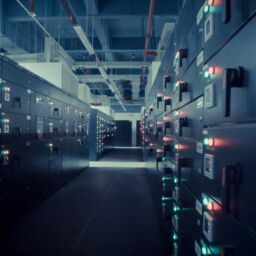
Modular electrification solutions use standard blocks of power which can be added to as a data centre expands, making them a flexible choice for sites in growth. And, they are cost and time effective too, as using prefabricated and predesigned solutions like eHouses and skids, can reduce the build completion time by as much as 50% compared to the traditional ‘stick built’ approach.
Maximising renewable power with battery storage
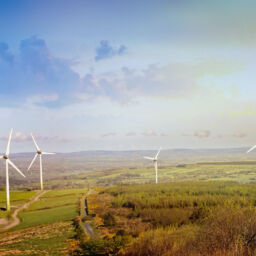
Sustainable power will be key for data centres in 2023 and we will see greater take-up of enabling technologies such as battery energy storage systems (BESS), which are becoming more mainstream. BESS allows data centres to store renewable energy generated on-site (from solar PV panels or a wind turbine) to be used when it’s most needed.
Add Artificial Intelligence to battery storage, and operators can use data acquisition, prediction, simulation and optimisation to automatically charge and discharge the battery to make it even more effective and efficient, and prolong its life cycle. This technology is already here and we’ll see more interest in it as digitalisation tools become more widely accepted by data centre operators.
BESS is also being hailed as a sustainable alternative to diesel gensets. Currently, generators can’t be run on hydrogen, which is being largely viewed as the clean fuel of the future. That said, successful trials with ammonia fuel cells may provide suitable carbon-free backup power for smaller data centres (up to 300kW).
With carbon reduction targets laid out for 2025 and 2030 in Europe already, investing in new, green technologies like battery storage now, is essential. Planning will be key as longer lead times should be expected with demand high and rising.
Giving back to the Grid
Another trend we expect to see this year is data centres becoming more active players in the power ecosystem, by doing more to support the electricity grids they rely on.
In 2021, data centres in the Republic of Ireland used 14% of the country’s electricity, so last year the Government there published a statement to say that going forward, any new facilities needed to work more positively with the grid – for example, using available capacity, increasing renewable energy use and alleviating constraints. Given that data centres consume around 4% of the world’s electricity a year, it is only a matter of time before more countries follow suit.
One way for data centres to be prosumers as well as consumers is to utilise their UPS battery storage capacity to provide frequency balancing services. Simply fit Frequency Regulation Functionality (FRF) to the UPS and this allows the grid to tap into a data centre’s unused reserves of power to respond to varying load demands and maintain frequency levels, thus reducing the risk of blackouts.
Supporting local homes and businesses
Giving back is a theme for 2023, and this year we expect to see more data centre operators exploring projects and technologies which allow them to utilise their heat waste.
Data centres generate large amounts of excess heat. Although it is low-grade heat, it can be piped to a heat pump plant and used for district heating. This year, a project to take excess heat from Meta’s Tietgenbyen data centre in Denmark will go live, providing heat to more than 12,000 homes in the nearby city of Odense.
The European Commission has suggested that data centres over 1MW should explore whether excess heat can be used in district heating supply. For data centres in more remote locations where this may not be possible, heat waste could be used to provide heat for nearby industrial applications such as commercial greenhouses.
Evolving data centre designs to cope with extreme heat
Last year’s extreme temperatures in Europe, where both Google and Oracle were forced to shut part of their systems when UK temperatures topped 40°C, have prompted many data centre operators to review their cooling strategies ahead of summer 2023.
Extreme heat stresses cooling systems by making components, such as compressors, pumps and fans, work harder than usual, which increases the likelihood of failures. Right-sizing plants and having appropriate backup power such as gensets and battery energy storage as part of a proper contingency plan for extreme heat could all be part of the solution.
In addition, we are coming closer to the tipping point for the transition to liquid cooling in data centres. This has been standardised by big names such as 3M and it allows greater rack density than ever before (up to 500kW). With greater cooling capacity achievable, this could provide a significantly more reliable and energy-efficient solution compared to mechanical cooling which currently accounts for around a third of energy use in a data centre.
Cost optimisation – generating long-term savings and benefits
Cost optimisation allows operators to manage, and, in some cases, extend the life cycle of key plant while helping to meet energy and carbon reduction targets and avoiding unnecessary downtime.
Cost optimisation can be carried out for all major equipment in a data centre facility. For example, with digital energy management tools, you can easily see what is performing at its optimum and what equipment is not operating efficiently and may be in need of repair or replacement. Even a 1% improvement in the battery efficiency of a UPS will reap significant cost benefits over its 10-year lifecycle.
Data centres have operated in ‘island mode’ in the past, but in 2023 we will see a change in this thinking as we move into a critical period in the fight against climate change. Energy and cost efficiencies are a must, new technologies are a must, and engaging with the community is a must – whether that’s through finding uses for waste heat or providing balancing services to aid the energy transition.
Demand for data is only going one way, and with more electric vehicles on the road, the rollout of 5G improving latency and the growing use of AI and machine learning, data centre capacity needs to be there to facilitate our electrified world. Growth in the data centre sector must be sustainable and have a positive impact in the communities where facilities are located – this is certainly something we will see a greater focus on this year.